
Asset turnover: definition, formula, benchmark
A retailer with an operating profit margin of 15% retains $0.15 for every sales dollar. This tells us that for every dollar of assets the company has, it generates $1.10 in sales. A high Working Capital Turnover Ratio indicates that a company is using its working capital efficiently to produce more revenue. Conversely, a low ratio suggests inefficiencies, potentially due to excessive inventory or receivables, or inadequate management of short-term liabilities. Companies strive to optimize this ratio to Cash Flow Management for Small Businesses ensure they are not tying up too much capital in non-productive assets.

Formula in ReadyRatios Analysis Software
The fixed asset turnover ratio formula measures the company’s ability to generate sales using fixed assets investments. Overall, asset turnover ratios can be a useful tool for financial forecasting because they provide insight into a company’s efficiency in generating revenue from its assets. Companies can make informed decisions about their operations and financial performance by examining their asset turnover ratios and comparing them to industry unearned revenue benchmarks and other financial metrics. The asset turnover ratio is a financial metric that measures the efficiency of a company’s use of its assets in generating revenue. FAT measures a company’s ability to generate net sales from its fixed-asset investments, namely property, plant, and equipment (PP&E).
- These assets are fixed because they are permanent and support a company’s productivity and operations.
- Investors use this ratio to compare similar companies in the same sector or group to determine who’s getting the most out of their assets.
- We’ll show you how to calculate the asset turnover ratio equation, and why it’s important to understand this accounting term.
- Therefore, the fixed asset turnover ratio determines if a company’s purchases of fixed assets – i.e. capital expenditures (Capex) – are being spent effectively or not.
- So from the calculation, it is seen that the asset turnover ratio of Nestle is less than 1.
- Efficiency ratios are financial metrics used to evaluate how effectively a company utilizes its resources.
Fixed vs.

The asset turnover ratio is most useful when compared across similar companies. Due to the varying nature of different industries, it is most valuable when compared across companies within the same sector. On the other hand, company XYZ, a competitor of ABC in the same sector, had a total revenue of $8 billion at the end of the same fiscal year. Its total assets were $1 billion at the beginning of the year and $2 billion at the end. This is the amount of revenue that the company earns after deducting any returns, discounts, or allowances. For example, if the company has net sales of $10 million for the year 2023, then this is the numerator of the ratio.
- Overall, asset turnover ratios can be a useful tool for financial forecasting because they provide insight into a company’s efficiency in generating revenue from its assets.
- Negative asset turnover indicates that a company’s sales are less than its average total assets.
- Knowing how to calculate asset turnover and how to use it to identify companies with competitive advantages can help uncover good investment opportunities.
- For example, a restaurant may find that it is spending 20% of its total food costs on buying the ingredients for hamburgers, even though only 5% of its sales are of hamburgers.
- The ratio can be used as a benchmark and compared with the other peer companies to clarify the performance of the business operations and its place in the industry as a whole.
- ROA, calculated by dividing net income by total assets, measures how effectively assets generate profit.
What are Some Industries with High Asset Turnover Ratios?
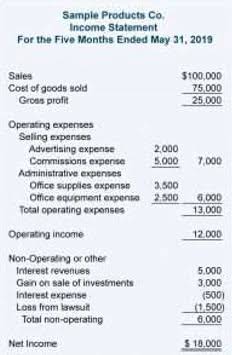
The price-to-earnings (P/E) ratio, calculated by dividing the market price per share by earnings per share (EPS), reflects investor expectations. For example, a P/E ratio of 20 indicates investors are willing to pay $20 for every dollar of earnings. The operating profit margin accounts for operating expenses, indicating cost management efficiency. Derived by dividing operating income by sales, it shows how much is retained after covering direct and indirect costs.
How to Calculate Your Fixed Asset Turnover Ratio

A high fixed asset turnover ratio indicates that a company is using its fixed assets efficiently. An asset turnover ratio equal to one means the net sales of a company for a specific period are equal to the average assets for that period. The company generates $1 of sales for every dollar the firm carries in assets. The total asset turnover formula is a simple and effective way to calculate how efficiently a company is using its assets to generate sales revenue. This formula is widely used in accounting and finance to evaluate a company’s performance. The ratio measures the efficiency of how well a company uses assets to produce sales.
Asset Turnover Ratio vs. Return on Assets (ROA)
To calculate the asset turnover ratio, you simply divide the company’s net sales by its total assets. For example, if a company has net sales of $100 million and total assets of $50 million, its asset turnover ratio would be 2.0 (100/50). This would indicate that the company is generating $2 in net sales for every $1 of assets it has.
What is a Good Asset Turnover Ratio for Your Industry and Business Size?Original Blog
A higher cash ratio indicates a company’s ability to cover short-term obligations solely with cash reserves. However, an excessively high cash ratio may suggest an inefficient use of cash resources. A higher current ratio indicates a better ability to cover short-term liabilities. However, an excessively high current ratio may suggest asset turnover ratio an inefficient use of assets. For instance, it could also indicate that a company is not investing enough in its assets, which might impact its future growth.